Home › Supply chain consultant, Riyadh
Supply chain consultant in Riyadh
I am Basel Hegazi, an independent supply chain consultant based in Riyadh. I work with manufacturers, healthcare groups, distributors and consumer businesses operating in Saudi Arabia on the things that decide whether the supply chain costs you money or wins you customers: how much stock you hold, what it costs to move, who supplies you, and where it all sits.
Book a free 30-minute callStart here
Pick the sentence that sounds most like your business right now.
Choose one above and I will tell you where the problem usually sits.
What businesses in Saudi Arabia usually call about
The presenting problem is rarely the real one. These are the five that come up most, and where the cause normally turns out to be.
- Too much stock, still stocking out
One replenishment rule applied across the whole range. Fast, stable lines and slow, erratic ones need different cover targets, and the lead times in the system are usually more optimistic than reality.
- Logistics cost rising on flat volume
No cost-to-serve view, so nobody can see which products, channels or customers are losing money. Rush freight covering planning gaps is normally a large part of the gap.
- Commercial and operations disagree every month
Two forecasts, no single plan, and no rule for what happens when demand and supply do not meet. This is a process problem, not a software problem.
- Suppliers miss dates without consequence
Service levels were never written into the contract, so there is nothing to enforce. Scorecards with agreed definitions change behaviour faster than pressure on unit price.
- The network was built for a smaller business
Warehouses and stock positions that made sense at one scale become expensive at another, particularly once you add a second or third region.
What is different about operating here
Generic supply chain advice tends to break on contact with the Saudi market. A few things that change the answer:
Import lead times are long and variable. Sea freight into Jeddah or Dammam plus customs clearance and SABER conformity means planning horizons that would be unusual in Europe. Safety stock policy has to be set against the real distribution of lead times, not the average.
Demand is not evenly spread across the year. Ramadan, Eid and the school calendar create peaks that dwarf the baseline in food, retail and consumer goods. A forecast that ignores the Hijri calendar will be wrong twice a year, by a lot.
Distances are real. Serving Riyadh, the Eastern Province and the Western Region from one site is a genuine trade-off between inventory cost and service, and the answer changes as volume grows.
Localisation requirements are shifting. Vision 2030 content rules and the regional headquarters programme are changing sourcing decisions that used to be made purely on cost.
Much of the market runs through distributors. If you sell through them, your demand signal is their replenishment behaviour, not end consumption — and those are different problems.
How an engagement runs
Look at it
Two to three weeks on site and in the data. You get a written view of where cost and service are being lost, ranked by what it is worth to fix.
Design the fix
A plan your team can run: process, structure, systems and the numbers behind each change, argued through with the people who will own it.
Stay until it holds
Implementation support until the new way of working survives without me — usually three to six months.
Background
Twenty years leading supply chain functions across the Middle East, including regional supply chain for The Estée Lauder Companies across the Middle East and Levant, and group supply chain for an industrial and energy group in Riyadh. Work is delivered in Arabic or English.
Basel reported to me as Supply Chain Manager, Middle East. He supported a business that had double digit growth. He managed demand planning, operations management, 3PL contracts and business improvement projects for the region. During his time in the job he led improvements of our customer relations and improved our operations service and quality.
Basel's manager at The Estée Lauder Companies.
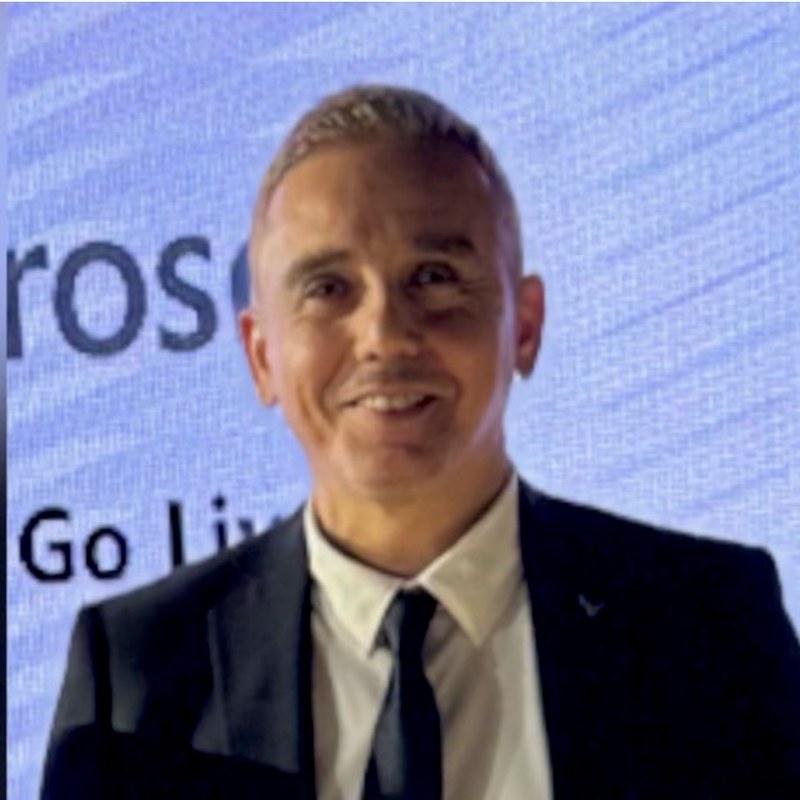
Basel HegaziIndependent supply chain consultant, Riyadh. Twenty years leading supply chain functions across the Middle East. Arabic and English.
Questions people ask
How much does a supply chain consultant in Riyadh cost?
A fixed fee for the diagnostic, quoted before it starts, so you know the cost of finding out. After that it is a project fee against an agreed scope or a monthly retainer for a set number of days. No hourly billing, and no fee tied to a share of the savings.
Do you work outside Riyadh?
Yes — across Saudi Arabia including the Eastern and Western regions, and the wider GCC, Levant and North Africa.
Do we need to replace our ERP first?
Almost never. Most of what a planning system would give you can be recovered from the system you already have, once the policies and the process behind it are right. Fixing the process first also stops you from paying to automate a bad one.
How long before we see anything?
The diagnostic gives you a ranked list of what is worth fixing in two to three weeks. Inventory and freight changes usually show in the numbers within a quarter; structural changes such as a network move take longer.
Tell me what is going wrong
Send a few lines on the situation and how you are measuring it. The first call is thirty minutes and costs nothing.
Start a conversation